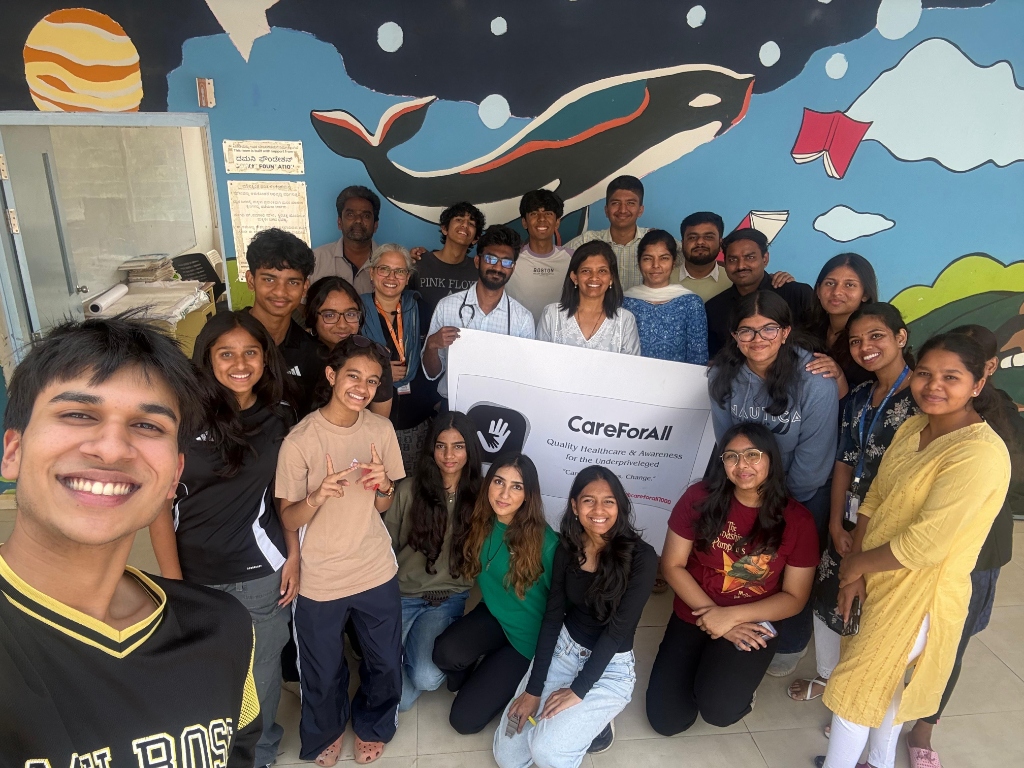
On the 3rd of January 2026, CareForAll collaborated with Ramagodanahalli Government School and organised a comprehensive medical camp for students between classes 6 and 8 across both English and Kannada medium sections. The camp was held on the school premises and reached nearly 220 students and was supported by 14 student volunteers and a team of paediatric specialists from Narayana Health. It was focused at identifying common yet often overlooked health concerns at an early stage, and the initiative brought preventive healthcare where access was simple and participation was natural.
CareForAll aims to bridge these gaps in healthcare access by bringing important services directly to communities that don't have access to them. Government schools often take care of kids who don't get regular medical care, making these early screenings essential. The purpose of this camp was to identify basic health problems, raise awareness, and make sure that kids got the right help before their budding concerns developed into long term challenges.
A Structured Approach to Screening
The camp followed a structured, station-based process to ensure efficiency and accuracy. Volunteers were paired and managed different health stations where students underwent basic screenings, including eye power checks, temperature readings, oxygen saturation (SpO₂), pulse monitoring, and measurements of height and weight. At each station, volunteers carefully recorded vitals on individual prescription sheets carried by each child, ensuring continuity as students moved through the process.
Once all the screenings were completed, the students met with doctors for one-on-one consultations. A team of five paediatricians from Narayana Health—four junior doctors and one senior consultant specialising in paediatric nephrology—reviewed each child's recorded data before conducting detailed assessments, allowing for focused diagnosis and guidance.
Identifying Common Health Patterns
The camp's size made it possible to identify common health patterns. In addition to growth-related concerns, vision issues, and dental caries, a number of children were discovered to have iron and vitamin D deficiencies. Even though many of these disorders are treatable, they can have a substantial impact on learning, energy levels, and general physical development if left undiagnosed and unaddressed.
In order to create a more cultivating experience, students were introduced to basic health concepts and were explained why different measurements were being taken. This allowed medical care to feel like something approachable rather than intimidating. One student shared, "The doctors told us what to do and gave us medicines. It was helpful, and it helped many of us." The simplicity of this response reflected the larger impact of the day—care that was clear, reassuring, and accessible.
Looking Ahead
By integrating healthcare into schools, early concerns can be identified without disrupting routine or placing additional financial strain on families. CareForAll plans to continue expanding similar initiatives, strengthening partnerships with medical institutions and schools to reach more children who would benefit from preventive care.
Sustainable change in child health relies on shared effort. Volunteering time, supporting school-based health programmes, and spreading awareness all play a role in ensuring that children grow with the care and attention they deserve.